
Crawl Space Structural Wood Repair in Charlotte, NC
Soft, uneven or sagging floors may be a warning that the wood beneath your home is losing strength. Moisture, mold, wet insulation and wood rot can damage floor joists, beams, girders, sill plates and subflooring until they no longer provide the support they should.
Wood damage does not repair itself. The longer the crawl space remains wet, the farther decay can spread and the more expensive the repair may become.
Southern Crawl Space Repair completes select structural wood repairs beneath Charlotte-area homes and helps identify the moisture conditions that caused the damage.
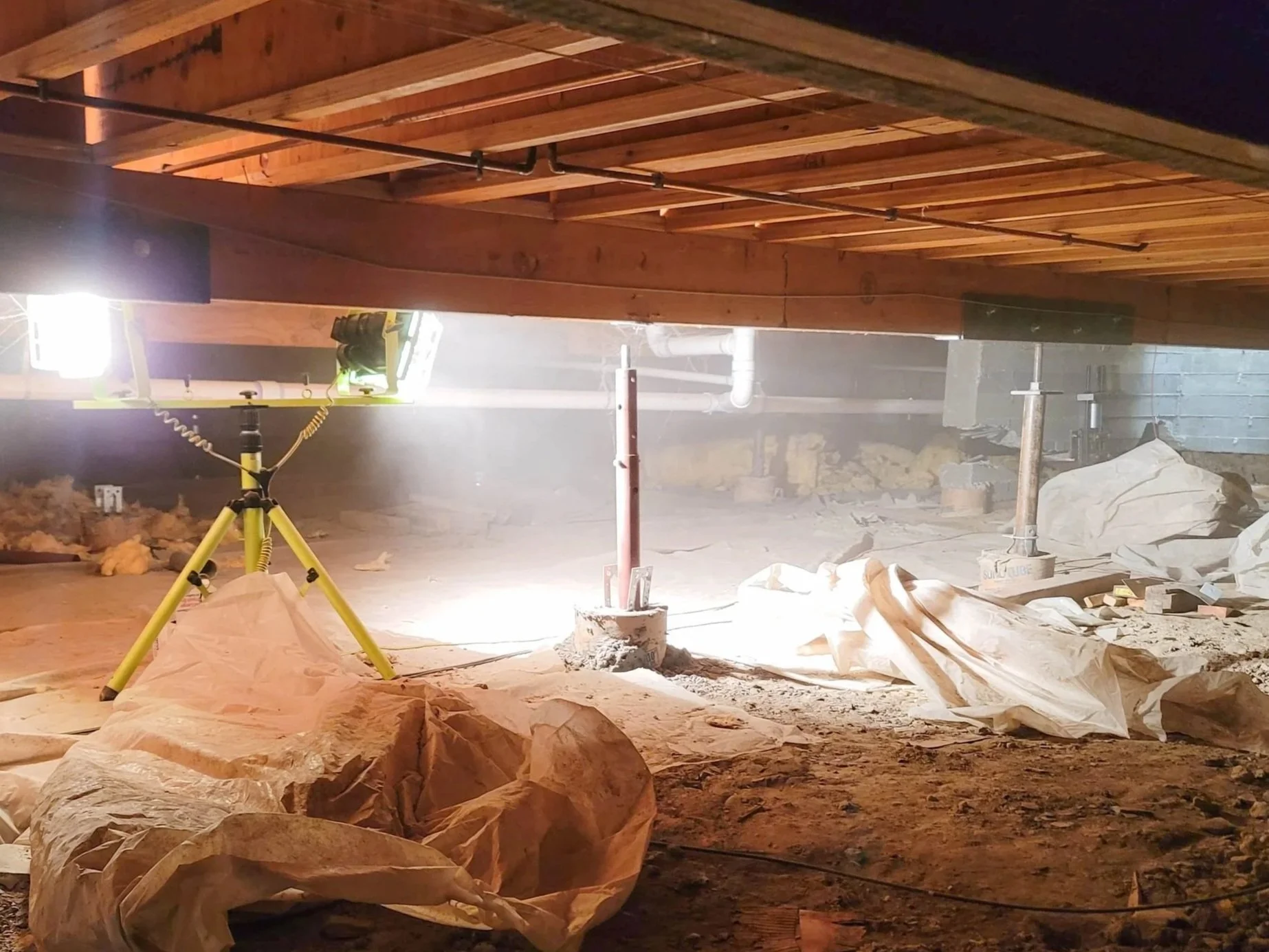
When moisture damages crawl space framing, structural repairs may be needed to reinforce or replace weakened floor joists, beams, girders, and support areas under the home
Signs Of Structural Damage
You may need a crawl space inspection if you notice:
Soft, bouncy, uneven, or sagging floors
Cupping or movement in hardwood floors
Wood rot under the home
Damaged floor joists, beams, girders, or sill plates
Mold or fungal growth on crawl space framing
Wet or falling insulation
High crawl space humidity or condensation
Standing water or drainage problems
Home inspection findings related to wood damage
Termite or pest-related wood damage
Wood damage under the home should not be ignored. If the cause is moisture, the damage can continue unless the crawl space is dried, sealed, drained, or protected.
Wood damage usually starts with moisture. In Charlotte’s humid climate, crawl spaces can stay damp from condensation, exposed ground moisture, poor drainage, plumbing leaks, failed vapor barriers, wet insulation, or high humidity trapped in your crawl space.
Wet insulation can be especially damaging when it stays in contact with wood framing. It can hold moisture against floor joists and subfloor areas, creating mold-friendly conditions and increasing the risk of wood rot.
Mold or fungal growth on wood framing can also be a warning sign that the crawl space has been wet or humid for too long. Before repairing wood, affected areas may need to be cleaned or treated, and the moisture source should be corrected.
Why Crawl Space Wood Gets Damaged
Southern starts by inspecting the crawl space framing and looking for the conditions that caused the damage. We check the joists, beams, girders, sill plates, subfloor areas, support points, moisture conditions, insulation, vapor barrier, drainage, and signs of mold or fungal growth. Depending on what we find, structural wood repair may include:
Floor Joist Repair: Damaged or weakened floor joists may be sistered, reinforced, or replaced where needed.
Beam and Girder Repair: Moisture-damaged beams or girders may need repair, reinforcement, or replacement to restore support under the floor system.
Sill Plate Repair: Sill plates can rot when moisture sits along the foundation or framing. Repairs may be needed where wood has softened or deteriorated.
Subfloor and Support Area Repair: In some cases, damaged subfloor areas or localized support points may need repair as part of the larger crawl space structural scope.
Mold or Fungal Treatment: If mold or fungal growth is present on accessible wood framing, treatment may be recommended before or along with the repair.
Crawl Space Wood Repairs
Structural Repair Without Moisture Control Is Not Enough
Replacing damaged wood does not fix the reason it failed. If the crawl space stays wet, humid, or poorly protected, new repairs can be exposed to the same conditions. That is why structural wood repair often needs to be paired with moisture control. Depending on the crawl space, the repair plan may include:
Encapsulation to seal the crawl space
A dehumidifier to control humidity
Drainage and sump pumps to remove water
Vapor barrier installation to control ground moisture
Insulation removal if wet insulation is holding moisture against wood
Mold remediation if fungal growth is present
The goal is to repair the damaged framing and help protect it from the moisture conditions that caused the problem.
When an Engineer or Specialist May Be Needed
Southern focuses on crawl space related wood repairs, including joists, beams, girders, sill plates, subflooring and localized support areas.
Major foundation movement, extensive settlement, masonry failure or repairs requiring engineered systems may need a structural engineer or foundation specialist. Active termite activity should be treated by a licensed pest-control company before damaged wood is repaired.
Strong Warranties. Clear Protection.
Southern backs our crawl space systems with clear written warranties.
25-Year Transferable Vapor Barrier Liner Warranty
Covers rips, tears and seam separation in Southern-installed vapor barrier liners.
25-Year Transferable Crawl Space Drainage Warranty
Covers Southern-installed crawl space drainage systems with required annual inspection and maintenance.
One-Year Workmanship Warranty
Covers Southern workmanship on services that do not include a separate written warranty.
Manufacturer Warranties
Dehumidifiers, sump pumps, battery-backup systems and other equipment include applicable manufacturer warranties.
Learn more about Southern’s warranties.
Not sure what is going on in your crawl space?
Let us inspect your crawl space for free. We will explain the problem, if any, and recommend the right next step.
Crawl space structural wood repair cost depends on the size of the space, the equipment needed and whether sealing or drainage work is required first. A free inspection is the best way to determine the right system and price.
By submitting this form, you acknowledge our Privacy Policy and Terms and Conditions.