
Crawl Space Waterproofing and Drainage in Charlotte, NC
Water beneath your home can quietly rot the wood supporting your floors, destroy insulation, feed mold and fungal growth, and lead to expensive structural and foundation repairs before you notice a problem upstairs. Charlotte’s heavy rainfall and slow-draining clay make crawl spaces especially vulnerable to standing water and repeated seepage.
Crawl space waterproofing does not mean covering wet ground with a vapor barrier. Southern first determines where the water enters and how it moves, then builds a drainage system that collects the water and carries it safely away from your home.
Our crawl space waterproofing process includes a graded interior trench with strip drain, sump pump, and discharge line. Southern installs the drainage system under our encapsulation system so water cannot collect beneath the new liner.
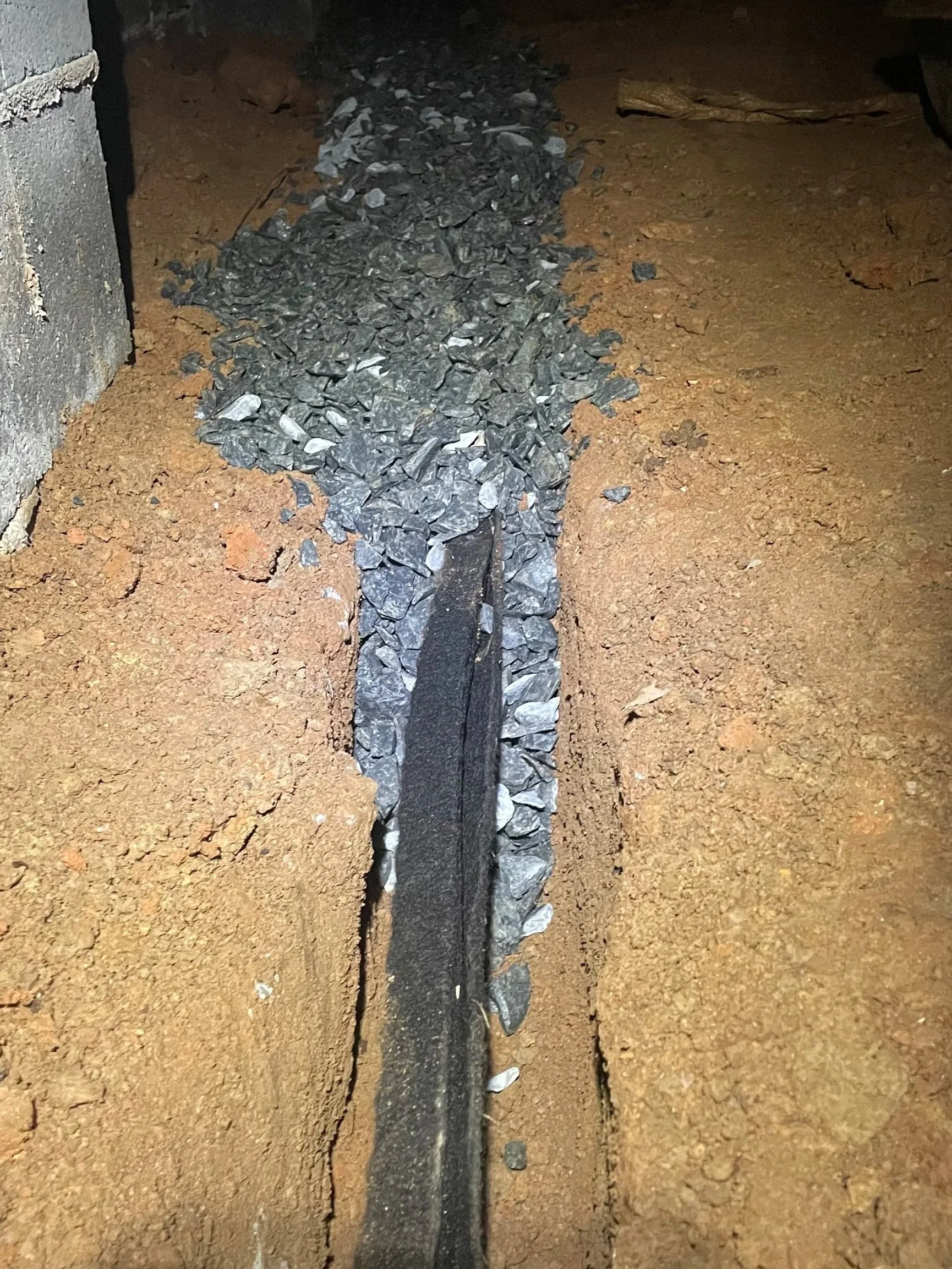
Southern installs a strip drain on a gravel base inside the crawl space drainage trench. We then backfill the trench with gravel and grade the system to direct water toward the sump pump
What is Our Crawl Space Waterproofing Process?
Crawl space waterproofing controls and moves the water that enters or collects beneath your home out and away from your foundation.
Dig the trench: Dig a trench down to the footing along the interior crawl space walls.
Grade the drainage path: Slope the trench toward the lowest point in the crawl space. Sometimes that requires digging sections of the trench deeper to keep water moving.
Build the drainage base: Lay a gravel base and install the strip drain on top.
Backfill with gravel: Cover the strip drain with gravel up to the crawl space floor.
Drainage Matting: In some cases, especially in rocky areas where trenching is difficult, Southern installs drainage matting beneath the encapsulation liner when the crawl space needs additional water movement. The raised matting creates a path that directs water toward the drainage system.
Install the sump pump: Connect the drainage system to a sump pump at the lowest point. The sump pump operates automatically with a float switch, and Southern offers an optional battery-backup system.
Pump the water away from the home: Run a discharge line out of the crawl space and direct the water safely away from the foundation.
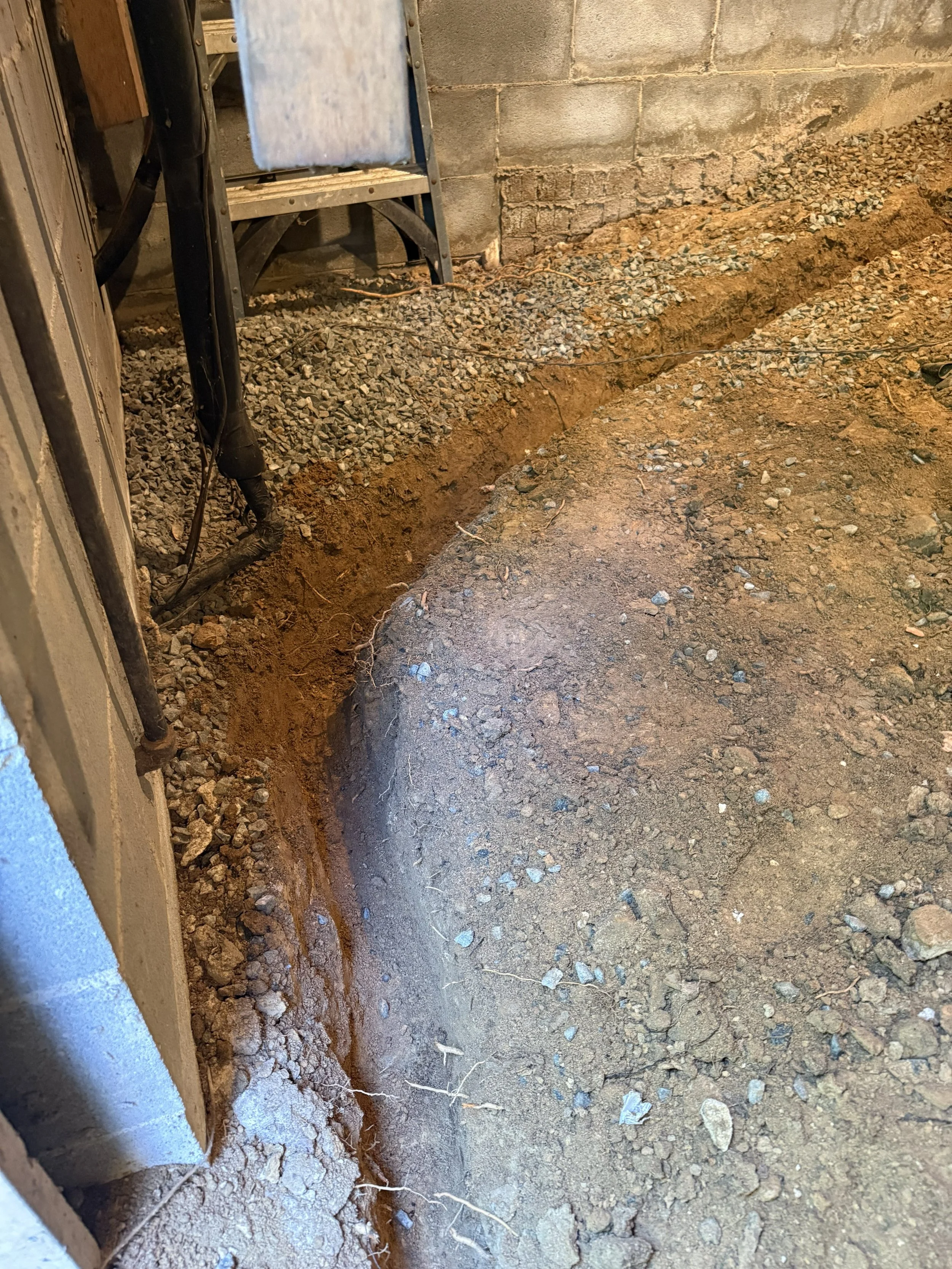
Southern grades the interior drainage trench toward the lowest point in the crawl space. Some sections require deeper excavation to maintain the proper slope and keep water moving toward the sump pump.
Where Does Crawl Space Water Come From?
Crawl space water problems can come from several sources. The right repair depends on the cause.
Poor Exterior Drainage: If the ground around the home slopes toward the foundation, water can collect near the crawl space and eventually find its way inside.
Downspouts and Gutters: Short downspouts, clogged gutters, or roof water dumping near the foundation can add a large amount of water around the crawl space.
Groundwater and Heavy Rain: After heavy rain, groundwater can rise or collect under the home, especially in low areas or homes with poor drainage.
Foundation Wall Seepage: Water can enter through crawl space walls, foundation openings, cracks, gaps, or other weak points.
Exposed Soil: Bare dirt can stay damp and release moisture into the crawl space even when there is no visible standing water.
Damaged or Missing Vapor Barrier: A torn, loose, or missing vapor barrier allows ground moisture to rise into the crawl space and can make water problems worse.
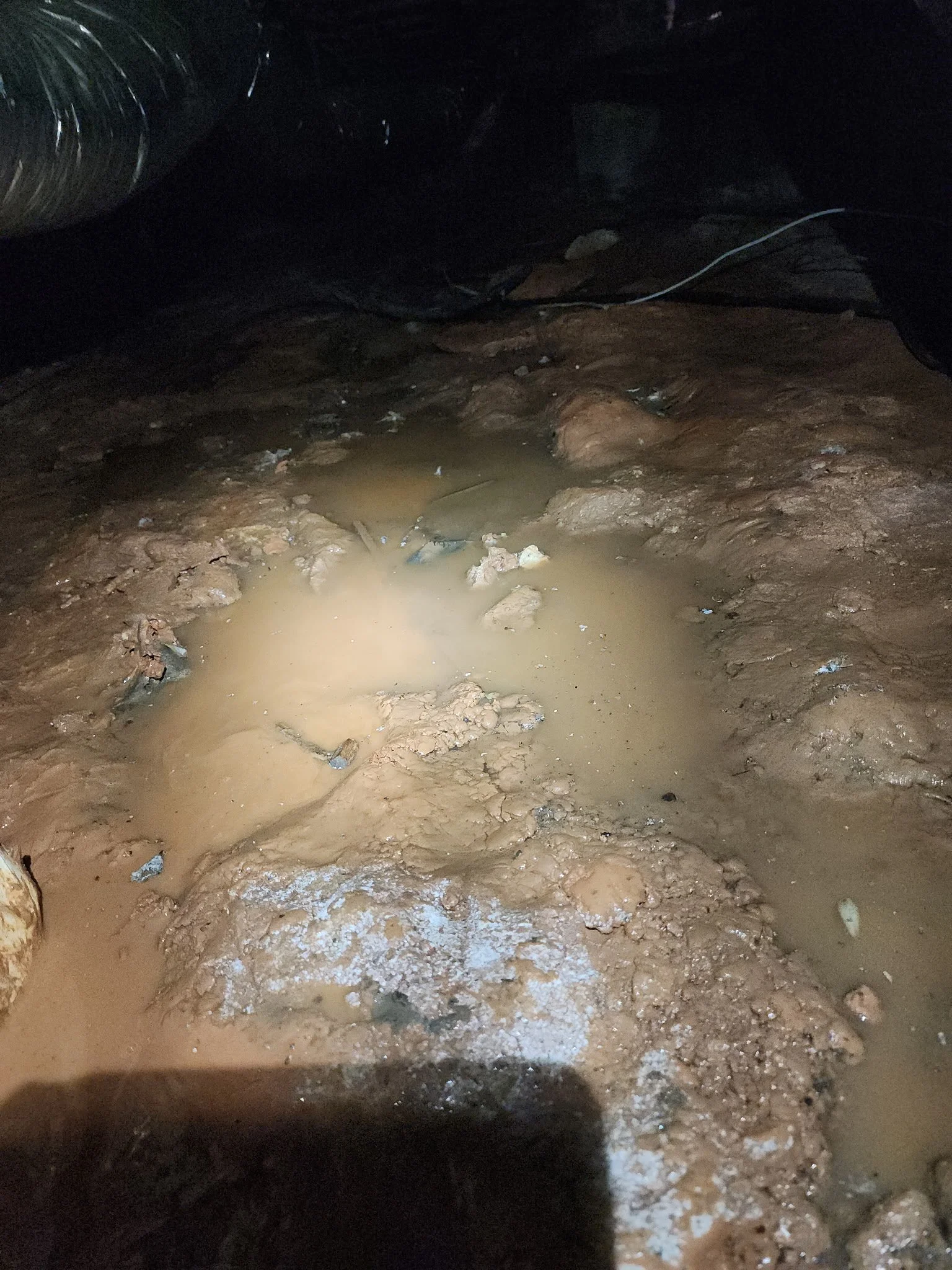
Standing water beneath a home can feed mold and fungal growth, soak insulation and accelerate wood damage. The repair may require interior drainage, a sump pump and discharge piping before the crawl space is encapsulated.
How Does a Crawl Space Sump Pump Protect Your Home?
The sump pump is the final stage in Southern’s crawl space waterproofing system. Trench drains direct collected water to the sump pump at the lowest point in the crawl space. When water fills the sump pump basin, the float switch automatically activates the pump and sends the water outside and away from your home. In some cases, Southern extends the discharge line farther into the yard so the water does not drain back toward your foundation.
For added protection during a power outage, Southern offers an optional battery-backup system that keeps the sump pump working when your home loses power.
Our sump pumps include a three-year manufacturer warranty.
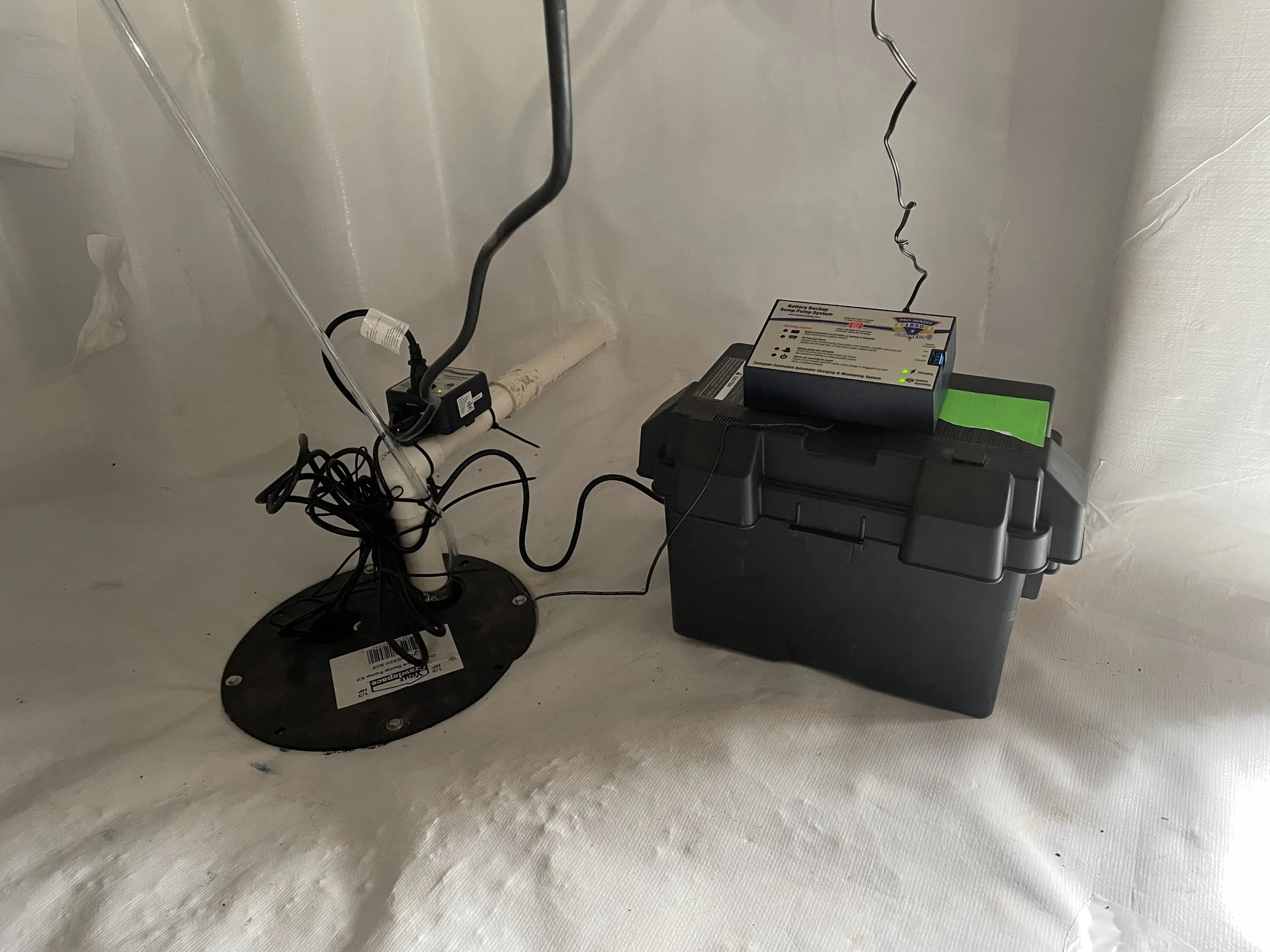
Southern’s sump pump automatically moves water collected by the trench drains outside and away from the home. The optional battery-backup system keeps the pump working during a power outage.
Strong Warranties. Clear Protection.
Southern backs our crawl space systems with clear written warranties.
25-Year Transferable Vapor Barrier Liner Warranty
Covers rips, tears and seam separation in Southern-installed vapor barrier liners.
25-Year Transferable Crawl Space Drainage Warranty
Covers Southern-installed crawl space drainage systems with required annual inspection and maintenance.
One-Year Workmanship Warranty
Covers Southern workmanship on services that do not include a separate written warranty.
Manufacturer Warranties
Dehumidifiers, sump pumps, battery-backup systems and other equipment include applicable manufacturer warranties.
Learn more about Southern’s warranties.
Not sure what is going on in your crawl space?
Let us inspect your crawl space for free. We will explain the problem, if any, and recommend the right next step.
Crawl space waterproofing and drainage cost depends on the size of the space, the equipment needed and whether sealing or drainage work is required first. A free inspection is the best way to determine the right system and price.
By submitting this form, you acknowledge our Privacy Policy and Terms and Conditions.