
Crawl Space Mold Remediation in Charlotte, NC
Mold growing beneath your home can enter the living areas above. Through the stack effect, air moves upward through gaps around plumbing, wiring, ductwork and floor framing, carrying mold spores, musty odors and other airborne particles into your home.
Southern applies a professional mold-cleaning treatment, brushes affected joists, beams, subflooring and other accessible wood framing, and removes contaminated insulation or debris when needed.
Treatment removes the mold present at the time of service, but it does not control the moisture that allowed it to grow. If high humidity, condensation, exposed soil or standing water remains, the mold will return. Southern identifies those conditions and recommends the right combination of encapsulation, drainage, and dehumidification to help prevent future growth.
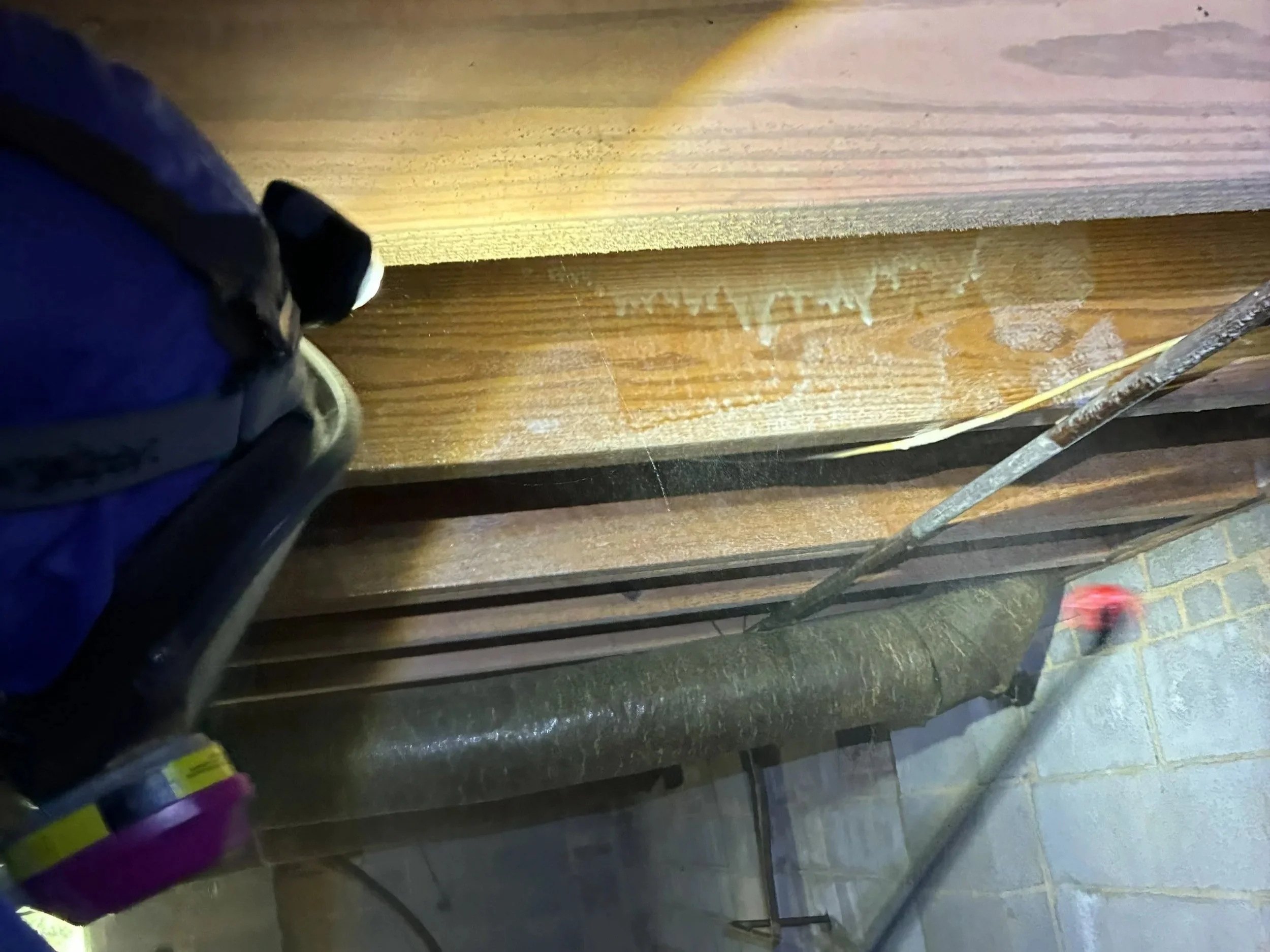
Southern applies a professional mold-cleaning treatment and brushes affected crawl space wood framing to remove visible mold growth.
What Is Crawl Space Mold Remediation?
Crawl space mold remediation should not be treated like a simple do-it-yourself cleaning project. Brushing wood, removing insulation and disturbing contaminated materials can release mold spores, dust and other particles into the air inside a tight, confined space.
Southern technicians use protective clothing, gloves, eye protection and respirators while treating affected areas. We apply a professional mold-cleaning treatment, brush accessible joists, beams, subflooring and other wood framing, and remove contaminated insulation or debris when needed.
Treatment removes the mold present at the time of service, but it does not control future humidity or water intrusion. If the crawl space remains damp, mold may return. Southern also identifies the moisture conditions behind the growth and recommends the drainage, encapsulation or dehumidification needed to help prevent it from coming back.
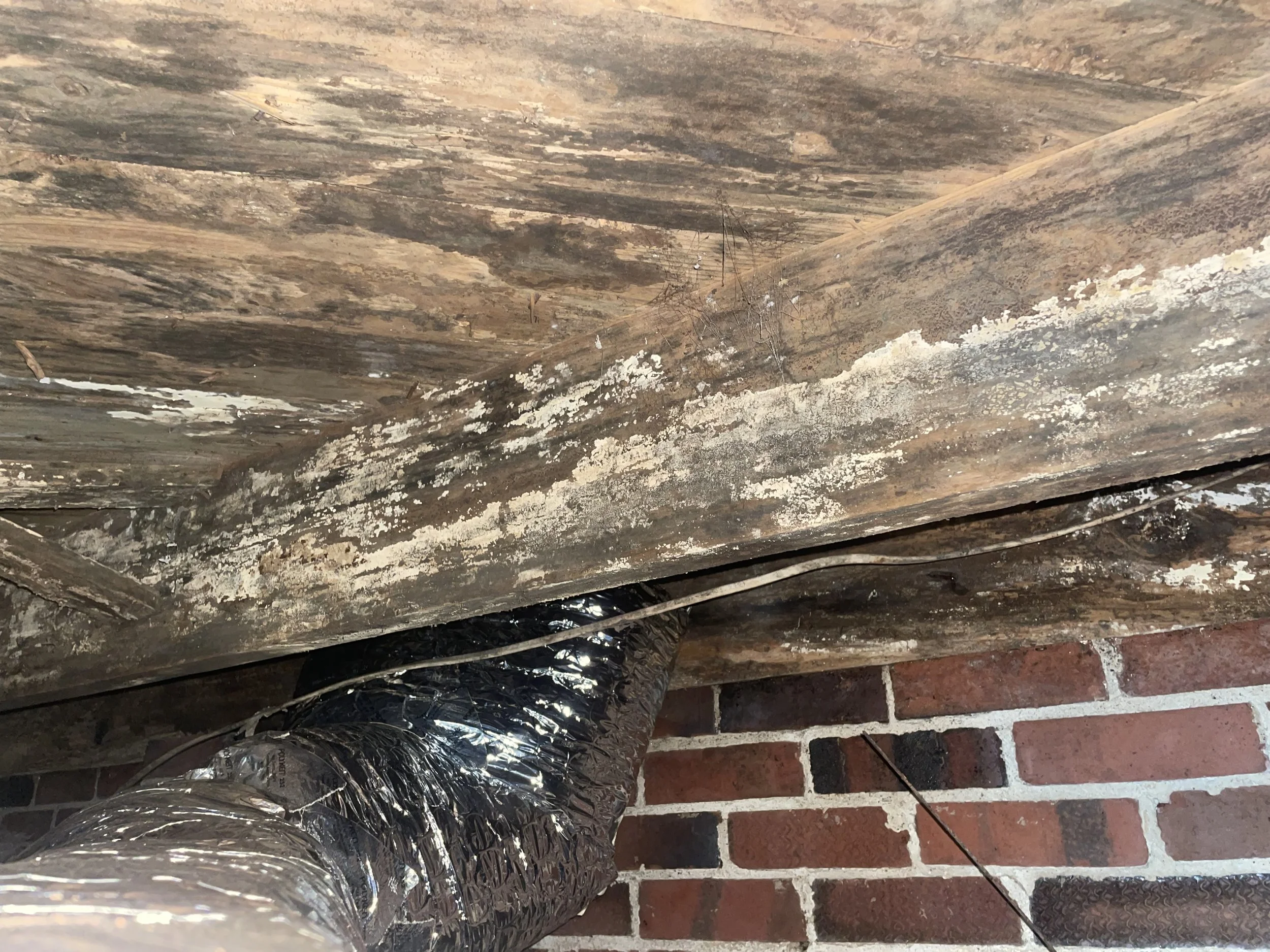
Heavy mold and fungal growth on crawl space wood framing often signals prolonged moisture exposure. The wood should be cleaned and inspected for rot or structural damage.
How Humidity Allows Crawl Space Mold to Grow
The CDC recommends keeping indoor humidity no higher than 50% throughout the day, while the EPA recommends keeping relative humidity below 60%, ideally between 30% and 50%. Charlotte’s outdoor humidity often exceeds those levels, making open crawl spaces vulnerable to mold and fungal growth.
Learn more about crawl space mold, humidity, allergies, and indoor air quality.
Signs You May Have Mold in Your Crawl Space
You may need a crawl space inspection if you notice:
Musty odors inside the home
Visible mold, mildew, or fungal growth on wood
White, black, green, or brown growth on floor joists or beams
Wet or falling insulation
High crawl space humidity
Standing water or damp soil
Condensation on ducts, pipes, or framing
Wood rot or soft wood
Crawl space issues found during a home inspection
Even if you do not go into the crawl space often, the air and moisture conditions under your home can affect the living space above it.
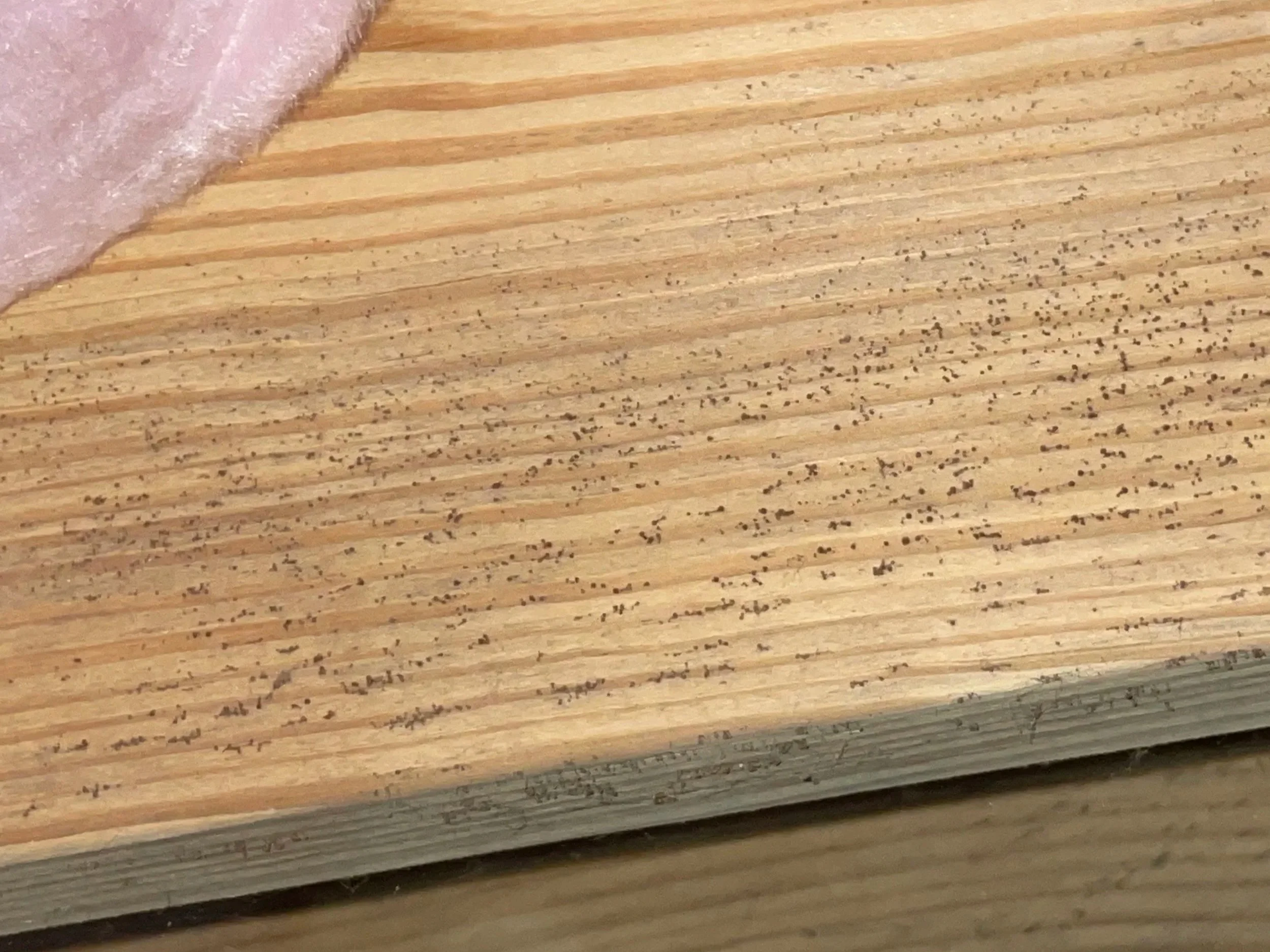
Crawl space mold can spread across wood framing when moisture is not controlled. Treatment should address the visible growth and the humidity or water issue feeding it.
Our Crawl Space Mold Remediation Process
Step 1: Inspect the Crawl Space
We check for visible mold or fungal growth, moisture, humidity, standing water, damaged vapor barriers, wet insulation, drainage problems, and wood damage.
Step 2. Identify the Moisture Source
Before recommending a repair, we look for what is feeding the mold. Common causes include high humidity, exposed soil, open vents, standing water, wet insulation, poor drainage, and failed vapor barriers.
Step 3. Treat Affected Surfaces
We treat mold, mildew, or fungal growth on crawl space wood and surfaces using professional-grade products appropriate for crawl space conditions.
Step 4. Remove Damaged or Contaminated Materials
Wet insulation, old vapor barrier, debris, or contaminated materials may need to be removed before moisture control or encapsulation work begins.
Step 5. Recommend Moisture-Control Repairs
Depending on what we find, your repair plan may include vapor barrier installation, crawl space encapsulation, drainage, a sump pump, a dehumidifier, waterproofing, insulation work, or structural wood repair.
Do Mold Remediation and Encapsulation Often Work Together
Yes, they work together. Mold remediation treats affected surfaces. Encapsulation helps control the conditions that allow mold to come back.
If your crawl space has exposed soil, high humidity, damaged vapor barriers, open vents, or musty odors, mold treatment alone may not be enough. A full repair plan may include mold remediation first, followed by vapor barrier installation, encapsulation, dehumidification, and drainage improvements if needed.
This is why Southern Crawl Space Repair inspects the space before recommending a repair. Some homes need a targeted mold treatment. Others need a complete moisture-control system.
Not sure what is going on in your crawl space?
Let us inspect your crawl space for free. We will explain the problem, if any, and recommend the right next step.
Crawl space mold remediation cost depends on the size of the crawl space, the amount of affected material and the cleaning or material removal needed. A free inspection is the best way to determine the right system and price.
By submitting this form, you acknowledge our Privacy Policy and Terms and Conditions.