
Ground Vapor Barrier vs. Crawl Space Encapsulation
A ground vapor barrier targets moisture rising from exposed soil. Partial encapsulation goes further by addressing humid outside air, condensation and uncontrolled humidity. Full encapsulation provides the most complete protection by sealing the foundation walls and support piers in addition to controlling ground moisture and humidity.
Standing water is a separate problem. When water enters or collects beneath the home, Southern may recommend crawl space drainage, a sump pump and discharge piping before or along with any of these moisture-control options.
| Moisture Control | Ground Vapor Barrier | Partial Encapsulation | Full Encapsulation |
|---|---|---|---|
| Ground moisture | Controlled with a ground vapor barrier | Controlled with a ground vapor barrier | Controlled with a ground vapor barrier |
| Humid outside air | Crawl space remains exposed | Vents and major openings are sealed, reducing outside-air entry | A continuous moisture-control system seals vents, accessible openings, walls and piers for the most complete protection |
| Crawl space humidity, condensation, musty odors and mold-friendly conditions | No active humidity control. Risk remains because the crawl space is still exposed to humid outside air | Controlled by sealing major openings and adding a professional-grade crawl space dehumidifier | Most complete control through continuous sealing and a professional-grade crawl space dehumidifier |
| Standing water or active water intrusion | Separate drainage required | Separate drainage required | Separate drainage required |
| 25-year transferable liner warranty | Included | Included | Included |
| One-year workmanship warranty | Included | Included | Included |
Swipe left or right to compare options on mobile.
Ground Vapor Barrier
A ground vapor barrier provides basic protection by covering exposed soil to help reduce moisture rising from the earth into the crawl space. Southern installs a reinforced 14-mil or 20-mil vapor barrier across the crawl space floor, pins it in place and seals the seams with four-inch seam tape.
Benefits of a Ground Vapor Barrier:
Controls moisture rising from exposed soil
Creates a cleaner crawl space floor
Helps reduce damp soil and ground odors
Improves access for future inspections and service
Includes Southern’s 25-year transferable encapsulation liner warranty
Includes Southern’s one-year workmanship warranty
A ground vapor barrier does not prevent outside air from entering the crawl space, which remains a major concern in Charlotte’s humid climate. Since the crawl space vents or other major outside-air openings are not sealed, a dehumidifier is not recommended with this option. The unit would be forced to continuously condition humid outside air, making it difficult to control humidity, condensation and mold-friendly conditions.
If the crawl space has standing water or active water intrusion, drainage must be addressed separately before or along with the vapor barrier.
Insulation Repair is a separate service. Depending on its condition and the crawl space moisture-control plan, Southern may:
Rehang existing floor insulation when it is dry, clean and still usable
Remove damaged floor insulation and install new floor insulation
Remove the floor insulation and install spray foam insulation on the foundation walls
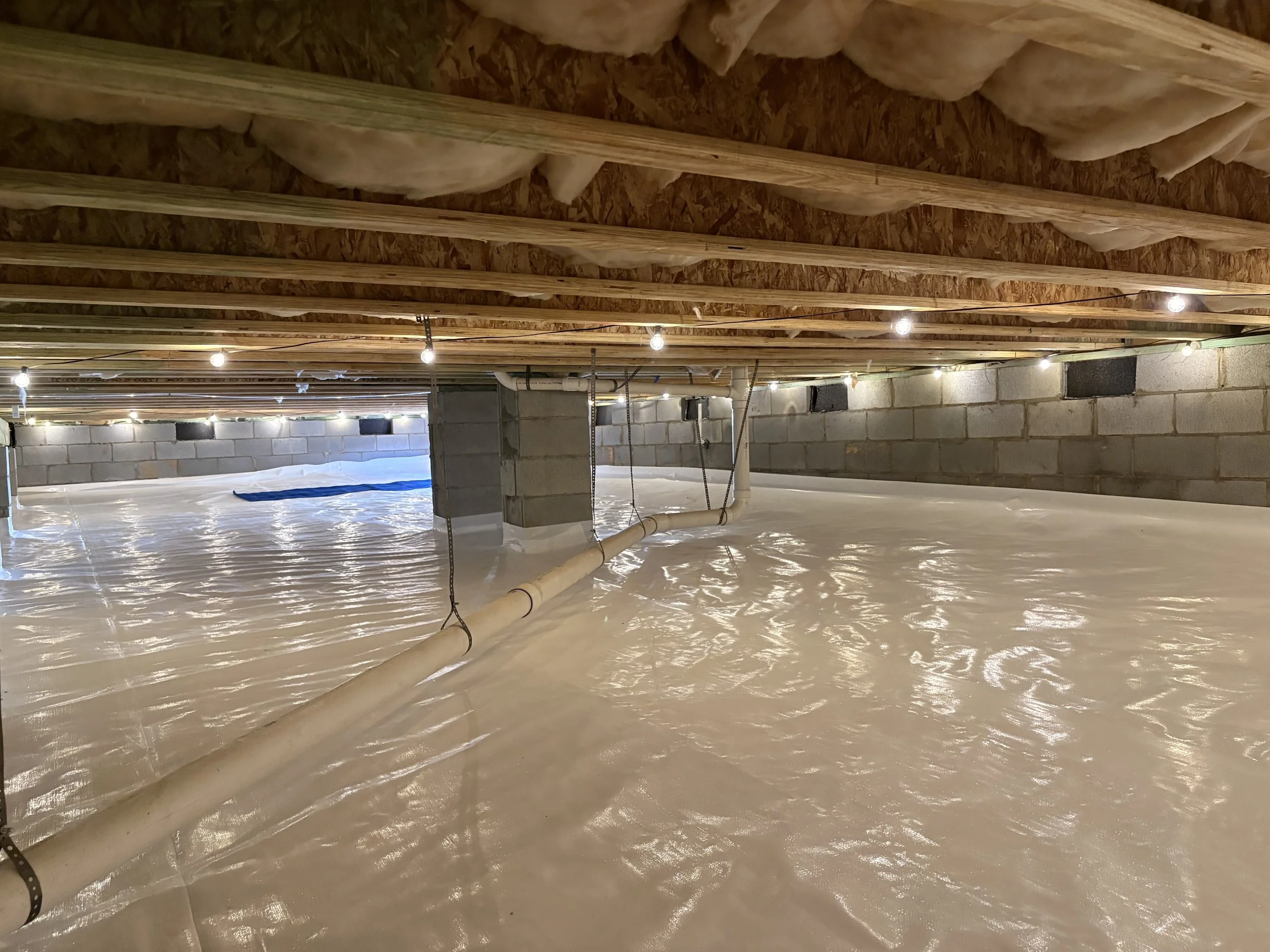
A ground vapor barrier covers exposed soil and helps control moisture rising from the earth. Because the crawl space walls, vents and outside-air openings remain exposed, high humidity, condensation and mold-friendly conditions may still need additional control.
Partial Crawl Space Encapsulation
Partial encapsulation adds outside-air control to the ground-moisture protection provided by a vapor barrier by sealing crawl space vents and major outside-air openings. We strongly recommend adding a professional-grade AprilAire® crawl space dehumidifier to remove trapped moisture from the air and maintain controlled humidity going forward.
Benefits of Partial Encapsulation:
Controls moisture rising from exposed soil
Restricts humid air entering through vents and major openings
Actively controls crawl space humidity
Helps reduce condensation on ductwork, pipes and framing
Helps control musty odors and mold-friendly conditions
Reduces prolonged humidity exposure affecting insulation and wood
Includes Southern’s 25-year transferable encapsulation liner warranty
Includes Southern’s one-year workmanship warranty
Partial encapsulation does not extend the vapor barrier up the foundation walls or wrap the support piers. Those porous masonry surfaces can continue holding and releasing moisture into the crawl space, and the barrier does not form one continuous sealed system across the floor, walls and piers.
If the crawl space has standing water or active water intrusion, drainage must be addressed separately before or along with the vapor barrier.
Insulation Repair is a separate service. Depending on its condition and the crawl space moisture-control plan, Southern may:
Rehang existing floor insulation when it is dry, clean and still usable
Remove damaged floor insulation and install new floor insulation
Remove the floor insulation and install spray foam insulation on the foundation walls
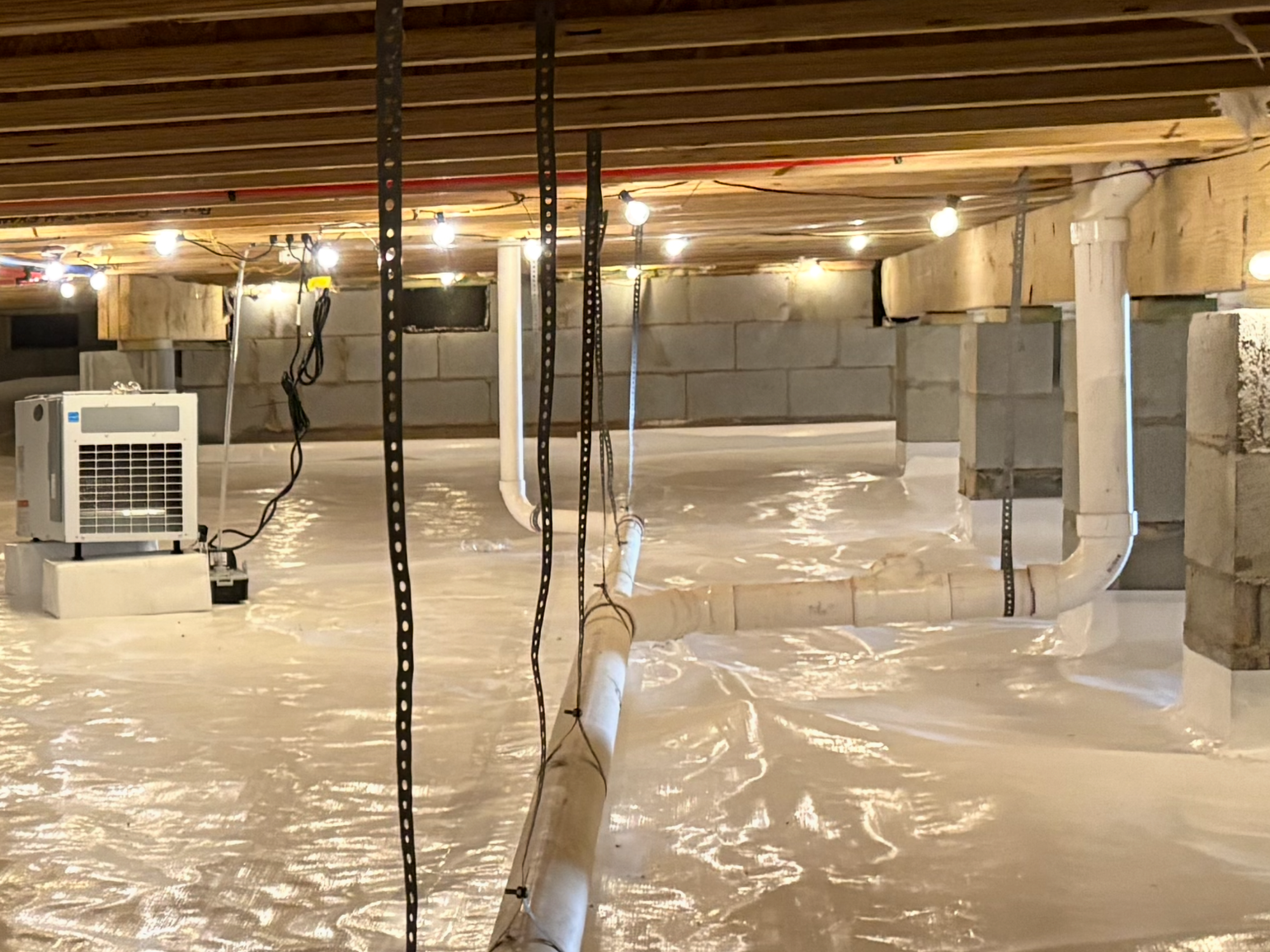
Partial encapsulation controls ground moisture with a sealed vapor barrier, restricts humid outside air by closing vents and major openings, and allows a professional-grade dehumidifier to control trapped crawl space humidity.
Full Crawl Space Encapsulation
Full encapsulation provides Southern’s most complete crawl space moisture-control system.
Southern installs and seals a reinforced ground vapor barrier, extends the barrier up the foundation walls, wraps the support piers, closes crawl space vents and seals accessible outside-air openings. This creates a continuous moisture barrier across the floor, walls and piers instead of leaving exposed masonry inside the crawl space.
We strongly recommend adding a professional-grade AprilAire® crawl space dehumidifier to remove trapped moisture from the air and maintain controlled humidity going forward.
Benefits of Full Encapsulation:
Controls moisture rising from exposed soil
Creates a continuous moisture barrier across the floor, walls and support piers
Provides the most complete protection from humid outside air
Allows a crawl space dehumidifier to control humidity more effectively
Helps reduce condensation on ductwork, pipes and wood framing
Helps control musty odors and mold-friendly conditions
Reduces prolonged moisture exposure affecting insulation and wood
Creates a cleaner, brighter and more controlled crawl space
Includes Southern’s 25-year transferable encapsulation liner warranty
Includes Southern’s one-year workmanship warranty
Full encapsulation is best for crawl spaces with multiple moisture sources or for homeowners who want Southern’s highest level of protection against ground moisture, humid outside air and uncontrolled crawl space humidity.
If the crawl space has standing water or active water intrusion, drainage must be addressed separately before or along with the vapor barrier.
Insulation Repair is a separate service. Depending on its condition and the crawl space moisture-control plan, Southern may:
Rehang existing floor insulation when it is dry, clean and still usable
Remove damaged floor insulation and install new floor insulation
Remove the floor insulation and install spray foam insulation on the foundation walls
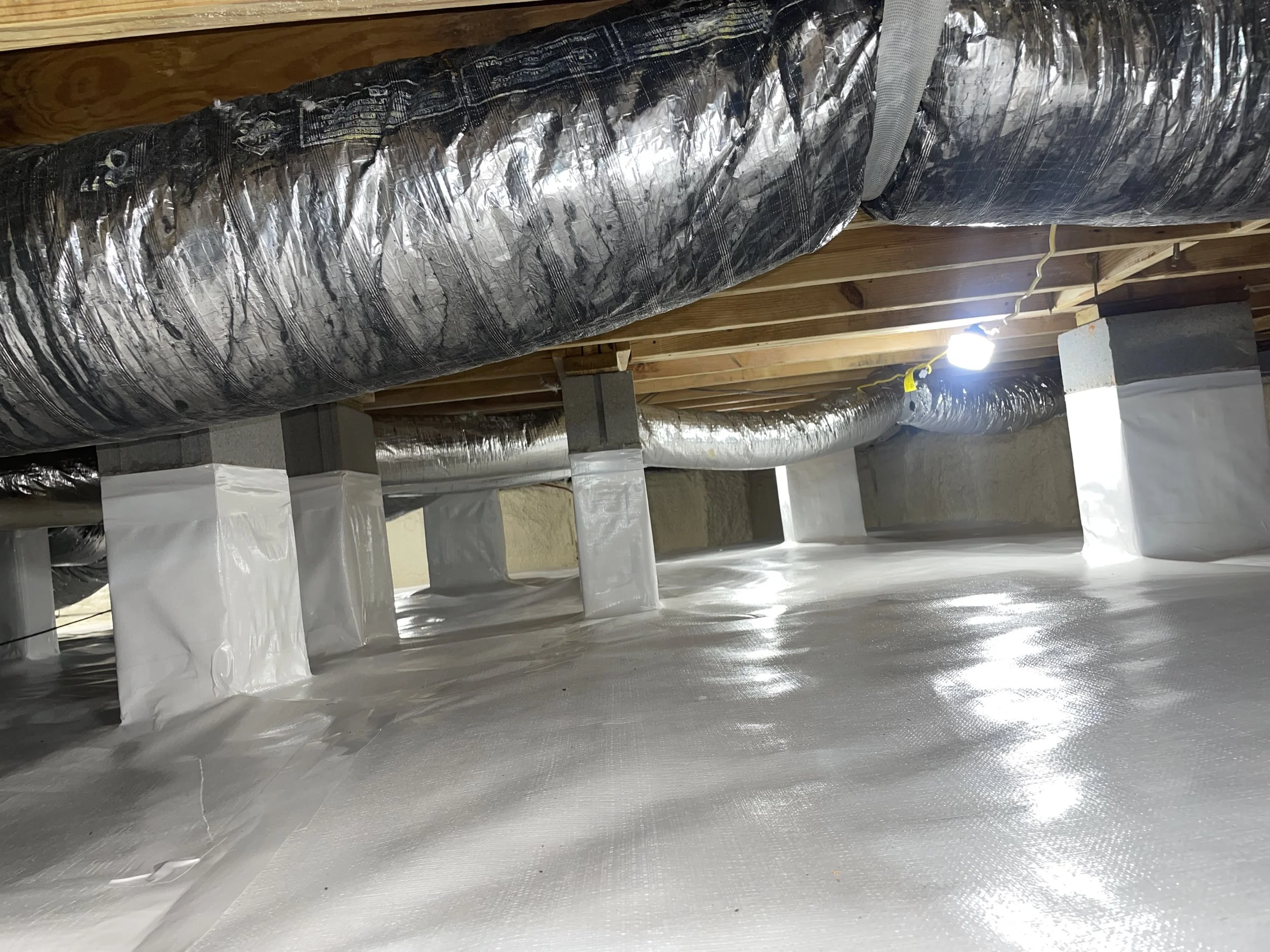
Full encapsulation creates a continuous moisture barrier across the crawl space floor, foundation walls and support piers, providing Southern’s most complete protection from ground moisture and humid outside air.
Why Partial and Full Encapsulation Need a Dehumidifier
Sealing the crawl space limits humid outside air, but moisture can remain in the air and enter from surrounding materials and normal conditions beneath the home.
A professional-grade crawl space dehumidifier actively removes that remaining moisture and helps maintain controlled humidity. That is why Southern strongly recommends a professional-grade dehumidifier with partial and full encapsulation.
A dehumidifier should not be installed as a substitute for sealing a vented crawl space. Trying to dehumidify a space that remains open to humid outside air forces the equipment to fight a continuous source of moisture.
Learn more about crawl space dehumidifiers.
What About Standing Water?
A ground vapor barrier, partial encapsulation and full encapsulation control moisture vapor and humidity. They do not remove active standing water by themselves.
A crawl space with standing water, muddy soil or repeated water intrusion may also need:
Interior crawl space drainage
A French drain or drain tile system
A sump pump
Battery backup protection
Discharge piping
Installing a vapor barrier over an active water problem can hide the water without correcting it. Southern addresses drainage before or along with encapsulation when water is entering or collecting beneath the home.
Learn more about crawl space Waterproofing and Drainage
Not sure what is going on in your crawl space?
Not sure whether your home needs a ground vapor barrier, partial encapsulation or full encapsulation?
A ground vapor barrier is generally the lowest-cost option. Partial encapsulation adds outside-air control, while full encapsulation uses more material and labor to create the most complete moisture-control system. The final price depends on the crawl space size, access, liner thickness, wall and pier coverage and whether mold treatment, drainage, insulation removal or wood repair is needed first.
Schedule a free inspection. We will identify the moisture sources, explain the differences and recommend the option that gives your home the right level of protection without paying for work it does not need.
By submitting this form, you acknowledge our Privacy Policy and Terms and Conditions.